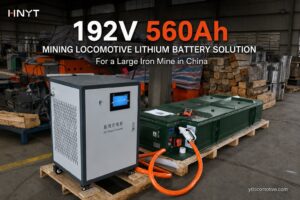
Lithium batteries for mining electric locomotives are transforming underground transportation with faster charging, higher energy density, and lower long-term maintenance costs. Compared with traditional lead-acid batteries, lithium battery systems offer significant advantages in charging efficiency, operating range, and lifecycle economics. These improvements are helping mines increase productivity while reducing downtime.
Below are several key aspects that explain why lithium batteries are becoming the preferred power source for modern mining electric locomotives.
Fast Charging Technology: How Is Underground Charging Achieved?
Traditional lead-acid batteries used in mining electric locomotives usually require 8–12 hours to fully charge. This long charging time often leads to operational delays and frequent battery replacement during shifts.
In contrast, lithium batteries support fast charging and opportunity charging, allowing the battery to be partially recharged during short parking intervals. Under normal conditions, a lithium battery pack can be fully charged in about 4–6 hours, significantly improving equipment availability.
Key Considerations for Underground Fast Charging
To implement fast charging systems in underground environments, several factors must be addressed:
Charging infrastructure design within limited underground power grid capacity
Smart battery management systems (BMS) to control charging speed and protect battery health
Optimized charging schedules to avoid peak power loads
Although fast charging improves operational efficiency, proper charging management is essential to maintain battery lifespan and ensure safe operation.
Higher Energy Density: How Much Does Range Improve?
One of the biggest advantages of lithium batteries for mining electric locomotives is their much higher energy density compared with traditional lead-acid batteries.
Practical Benefits in Mining Operations
In real mining applications, lithium battery locomotives offer:
30%–50% longer operating range compared with lead-acid battery systems
The ability to support two full work shifts with a single charge
Reduced need for battery replacement during operations
This extended range means miners no longer need to stop frequently for battery replacement or long charging periods. As a result, transportation efficiency and productivity are significantly improved.
Full Lifecycle Cost: Is Five Years of Maintenance-Free Operation Realistic?
Although lithium batteries require a higher initial investment, their long lifecycle provides major economic advantages.
Battery Lifecycle Comparison
Typical battery lifespans show a large difference:
Lithium batteries: up to 4000 charge cycles
Lead-acid batteries: approximately 800 cycles
This means a lithium battery pack can last five times longer than a traditional lead-acid battery under similar working conditions.
Lower Maintenance Requirements
Lithium batteries also eliminate many routine maintenance tasks, such as:
Adding distilled water
Managing electrolyte levels
Frequent equalization charging
Because of these advantages, overall maintenance costs can be reduced by about 40%.
Long-Term Cost Savings
When calculated over a 5–8 year service period, purchasing one lithium battery system can effectively replace several sets of lead-acid batteries. This results in significant savings in both equipment replacement costs and labor expenses.
Additional Operational Advantages
Lithium battery systems also provide other benefits for mining electric locomotives:
Stable voltage output, improving traction performance
Reduced battery weight, improving locomotive efficiency
Lower environmental impact, since lithium batteries do not require liquid electrolyte maintenance
These features make lithium batteries particularly suitable for modern intelligent mining operations.
Conclusion
Lithium batteries for mining electric locomotives offer faster charging, higher energy density, and lower lifecycle costs compared with traditional lead-acid batteries. With charging times of only 4–6 hours, operating ranges 30–50% longer, and lifespans of up to 4000 cycles, lithium batteries are becoming the future power solution for underground mining transportation. By adopting lithium battery technology, mines can improve efficiency, reduce maintenance work, and achieve more reliable operations.



 English
  Spanish
  Russian